
005- Helpful Articles
Why I Deliberately Ruin Good Paintings
There’s a particular moment in the life of a painting that can be both exhilarating and terrifying.
You look at it and think, That’s actually quite good.
And then, quite often, I ruin it.
Not because I’ve suddenly taken against it. Not because I’ve run out of ideas. And certainly not because I have some strange urge to destroy perfectly respectable paintings.
Although, having spent 25 years in advertising, perhaps I do have a slightly unhealthy relationship with perfectly respectable things.
The truth is that I’ve learned to distrust the moment when a painting starts looking too comfortable.
For much of my working life, perfection was the objective. Advertising and design are full of rules, refinements, approvals and people moving things around by three millimetres because, apparently, the entire campaign depends upon it.
Painting is different.
One of the things I love most about working abstractly is that I don’t have to know exactly where I’m going. I can make a mark, change my mind, paint over it, scrape it back, add something completely unexpected and see what happens.
That freedom is incredibly liberating.
It can also be really bloody terrifying.
The problem with a painting being ‘good’
The danger comes when a painting reaches a point where it looks finished, but I know there’s still something missing.
It’s tempting to stop.
After all, there’s a perfectly good painting sitting in front of you. Why risk destroying it?
Because sometimes the thing stopping it from becoming a better painting is the fact that it has become too safe.
It has settled into a comfortable place.
And comfortable is not always interesting.
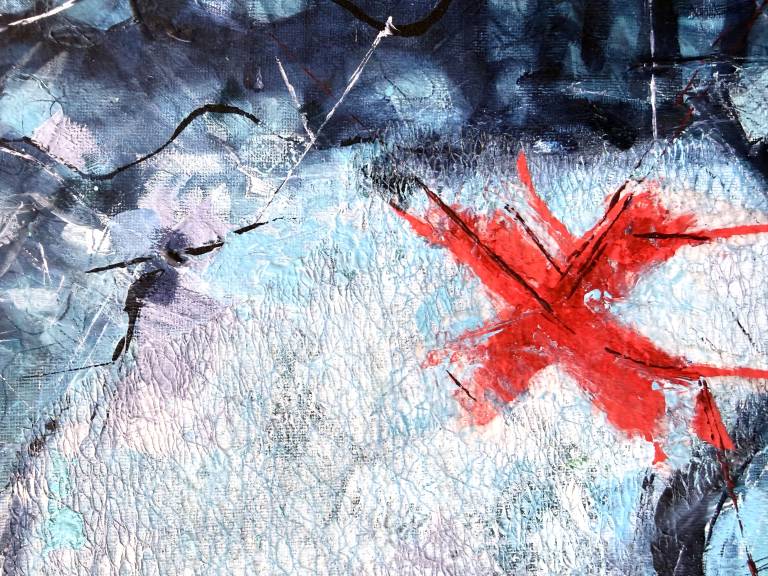
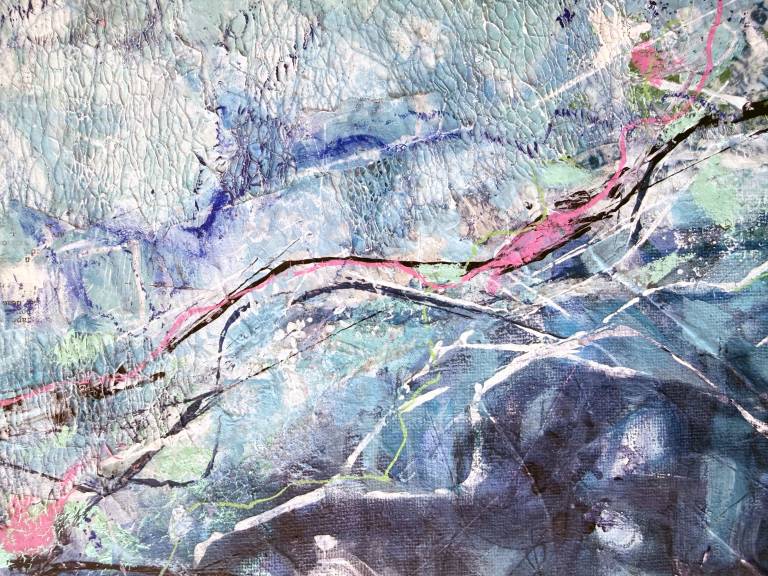
So I might deliberately introduce something that doesn’t belong. A colour that feels wrong. A line that interrupts the composition. A layer of paint across something I’ve spent hours building.
Sometimes I’ll scrape into the surface. Sometimes I’ll carve into it. Sometimes I’ll drill into it.
Metaphorically speaking of course
I might dig through several layers to expose something that was painted weeks earlier and has effectively disappeared beneath everything that came afterwards.
What looks like destruction is often excavation.
The archaeology of a painting
I like the idea that a painting can have a history even if you can’t see all of it.
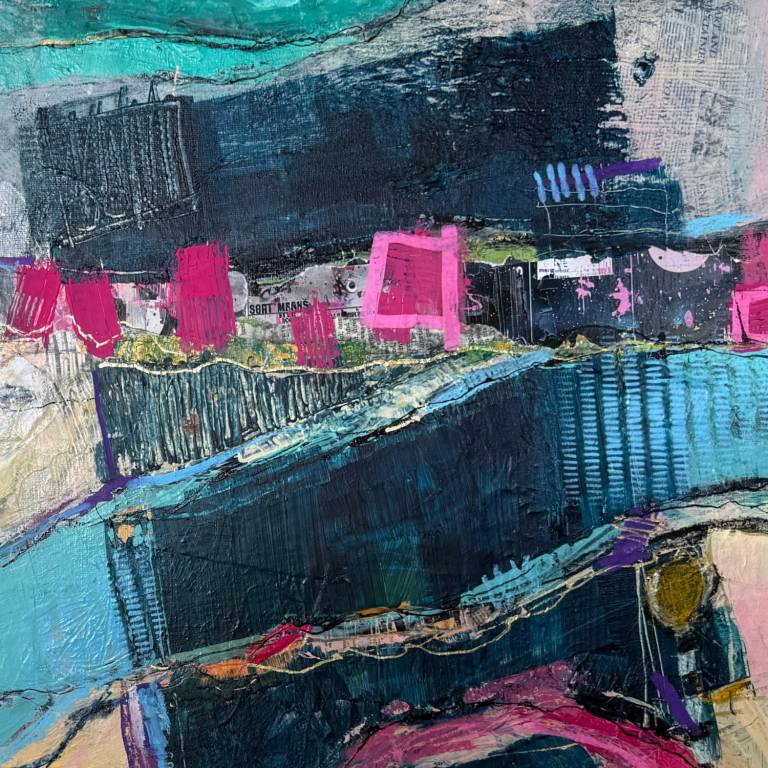
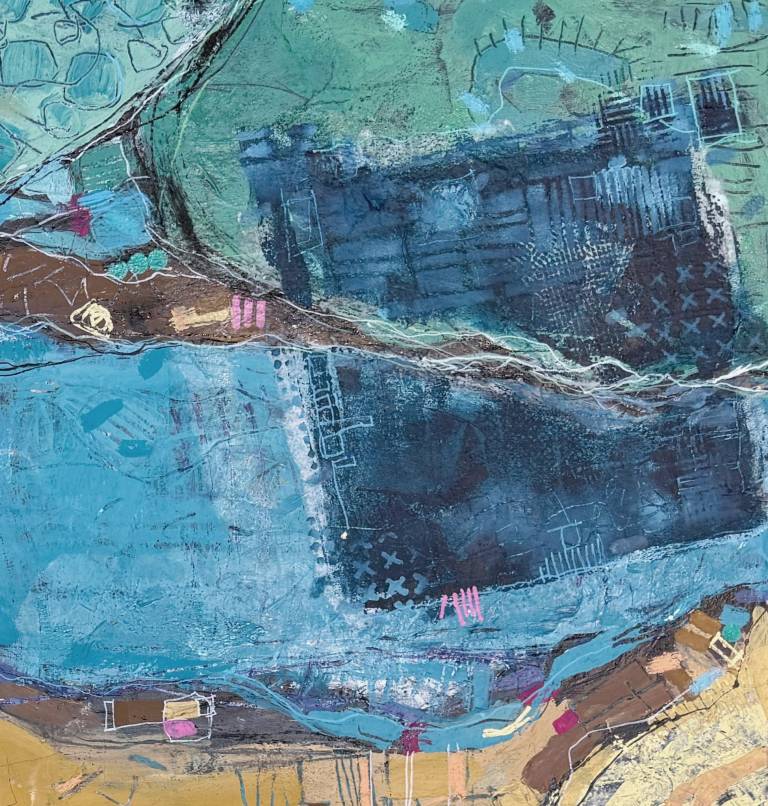
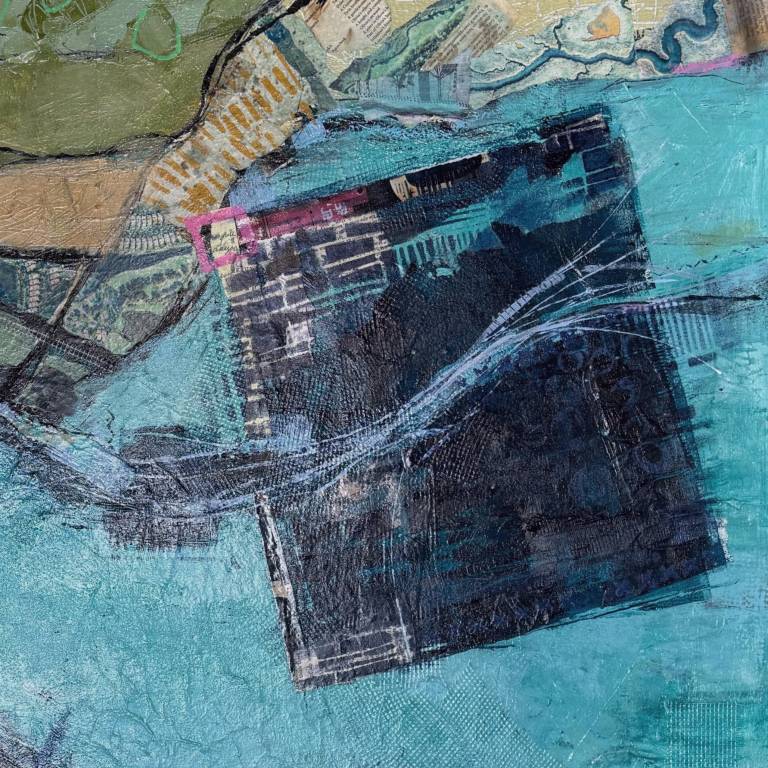
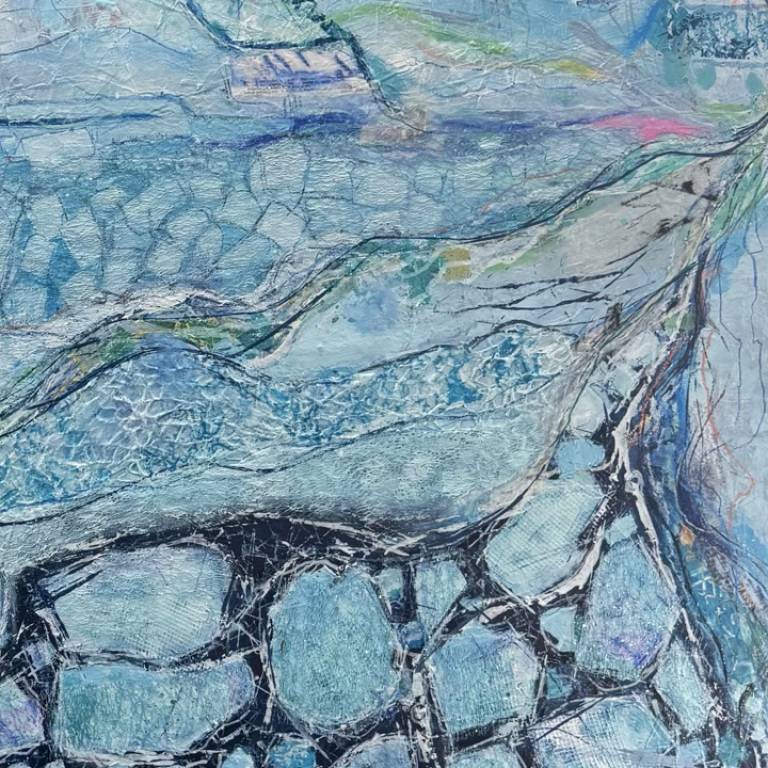
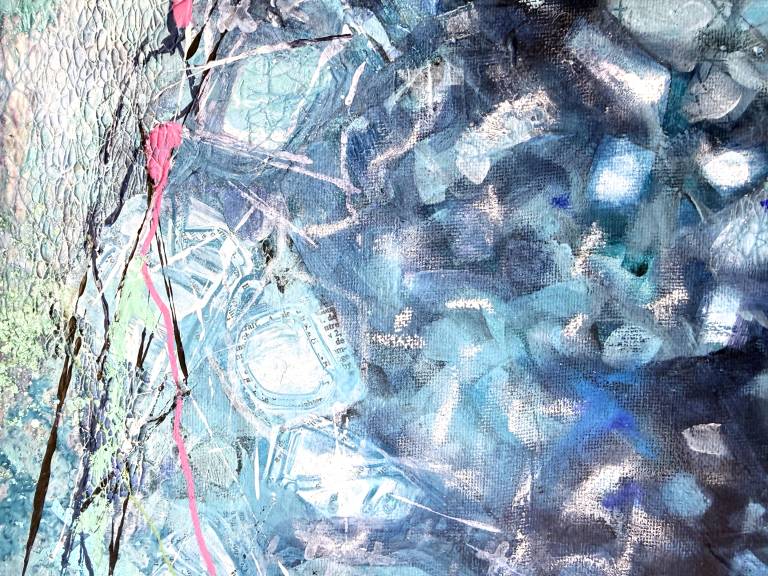
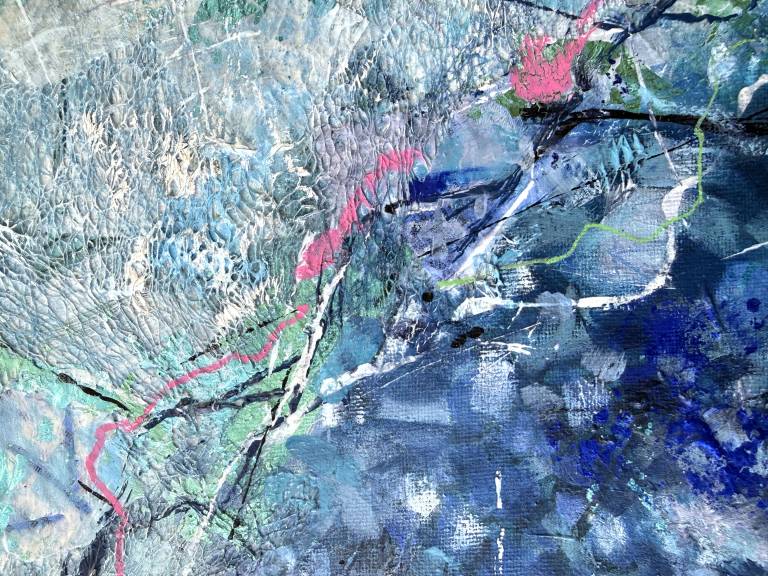
There might be five, ten or twenty layers underneath the surface. Bits of collage. Old colours. Marks that didn’t work. Sections that I loved and then decided I hated. Things that were almost there but needed to disappear.
Except they never completely disappear.
They remain buried beneath the surface.
When I scrape or carve into a painting, those earlier decisions can suddenly reappear. A flash of colour. A fragment of paper. An old mark.
It’s a bit like archaeology, except the archaeologist is armed with an angle grinder and has questionable judgement.
And those buried layers aren’t wasted.
They become part of the physical structure of the work. They create texture, depth and a history that would never have existed if I had simply painted the final image in one go.
Going back to ground zero
Sometimes, though, there comes a point where the only sensible thing to do is to go back almost to the beginning.
Ground zero.
That can mean covering much of the surface again, sometimes returning it to something close to the original whiteness of the canvas or board.
It sounds like failure.
I don’t see it that way anymore.
The previous painting hasn’t been wasted. I’ve learned from it.
I know what didn’t work. I know which colours fought each other. I know where the composition became predictable. I know which marks had energy and which ones were simply filling space.
Starting again doesn’t mean starting from nothing.
It means starting again with experience.
That’s a very different thing.
The strange thing about working in series
This is also why I love working in series.
An idea that doesn’t quite work in one painting isn’t necessarily a bad idea. Sometimes it simply belongs somewhere else.
A colour combination might fail completely in one piece and suddenly become the starting point for another.
A texture I couldn’t make work might become the most important part of the next painting.
A mark that looked ridiculous yesterday can suddenly make perfect sense today.
Nothing really gets wasted.
It just gets recycled.
Which is probably appropriate for someone who spends an unreasonable amount of time collecting things that other people would happily throw away because I think they might make an interesting mark.
Knowing when to stop
Of course, there is a downside.
The hardest part of abstract painting isn’t necessarily knowing what to do next.
It’s knowing when to stop.
There is always another layer you could add. Another section you could scrape back. Another colour you could introduce. Another brilliant idea that might, in fact, turn out to be a catastrophically stupid one.
I’ve ruined paintings that should probably have been left alone.
That’s part of the deal.
You have to accept that sometimes the risk doesn’t pay off.
But I’d rather occasionally ruin a good painting trying to make it something better than preserve it simply because I was too frightened to take the next step.
For me, that’s one of the great freedoms of painting.
The objective isn’t perfection.
It’s discovery.
And sometimes you have to destroy something that works to find something that matters.
So yes, I deliberately ruin good paintings.
Sometimes.
And every now and then, underneath all the scraping, drilling, painting, covering and generally making a complete mess of things, something rather better emerges.
That’s when I know the ruin was worth it.