
003 - Helpful Articles
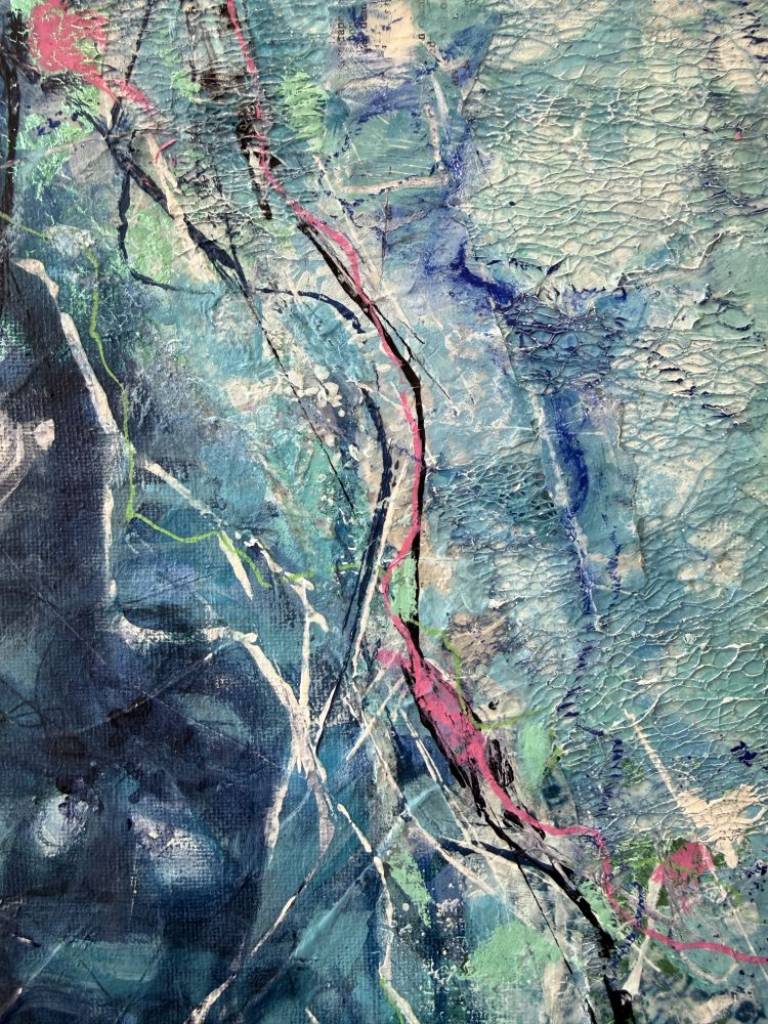
Choosing Materials for Mixed Media Collage
People often ask where I find the materials I use in my paintings. The honest answer is… everywhere.
I’m forever picking things up. A weathered scrap of paper caught on a fence. A piece of worn fabric. Old maps, packaging, handmade papers, even the odd offcut that’s been sitting quietly in the studio waiting for the right painting to come along.
I don’t collect these things because they’re unusual. I collect them because they already have a story.
That’s one of the joys of collage. You’re introducing materials that have lived a life before they arrive on the canvas. A torn edge, a faded print or the texture of handmade paper can say something that paint simply can’t.
That said, not everything deserves a place in a painting.
Choose with your eyes, not your shopping list
When I started experimenting with collage, I thought the answer was having more materials. Bigger boxes. More textures. More options.
I soon realised the opposite was true.
These days I’m much more selective. I’d rather have a small collection of beautiful papers and interesting surfaces than drawers full of things I’ll never use.
When I’m choosing a material, I’m usually asking myself a few simple questions.
"Does it bring something the paint can’t?"
"Does it help the composition?"
And perhaps most importantly…
"Does it belong?"
If the answer is no, it stays in the drawer.
Think about longevity
I’m also conscious that my paintings are made to last.
Collectors don’t buy a painting expecting bits to fall off in five years’ time.
Whenever possible, I use acid-free papers, quality fabrics and archival adhesives. They cost a little more, but they give me confidence that the work will age well. If you’re putting hours into creating something meaningful, it’s worth building it on solid foundations.
That doesn’t mean found materials are off limits. Far from it.
Old book pages, handmade papers and weathered textiles can all work beautifully. I simply make sure they’re clean, stable and properly sealed before they become part of a painting.
Less really is more
One lesson collage has taught me is restraint.
When every interesting scrap makes its way onto the canvas, nothing feels important anymore.
Sometimes a single piece of handmade paper can transform a painting. It catches the light differently, interrupts a large area of colour or quietly shifts the balance of the composition.
That’s often enough.
I’ve learned not to add collage simply because I can. Every element has to earn its place.
Build your own collection
One of the nicest parts of working this way is that your materials become personal.
Over time you’ll build a collection that nobody else has.
You’ll find papers on your travels, keep wrapping from something special, rescue fabrics that would otherwise be thrown away or make your own collage papers in the studio. Before long, those materials become part of your artistic language.
I think that’s important.
My paintings shouldn’t just look like my work because of the way I paint. They should also look like my work because of the materials I choose to surround myself with.
Let the painting decide
If there’s one piece of advice I’d pass on, it’s this.
Don’t start with the collage.
Start with the painting.
Listen to what it’s asking for. Sometimes that’s another brushstroke. Sometimes it’s a torn edge, a fragment of paper or a piece of fabric that brings everything together.
And sometimes…
It’s asking you to leave it exactly as it is.
For more detailed information or if you are considering a commission, please contact me on +44 07549 756414 or by email at Tim@wlcx.art
Written: 13 July 2026
------------------------------------------------